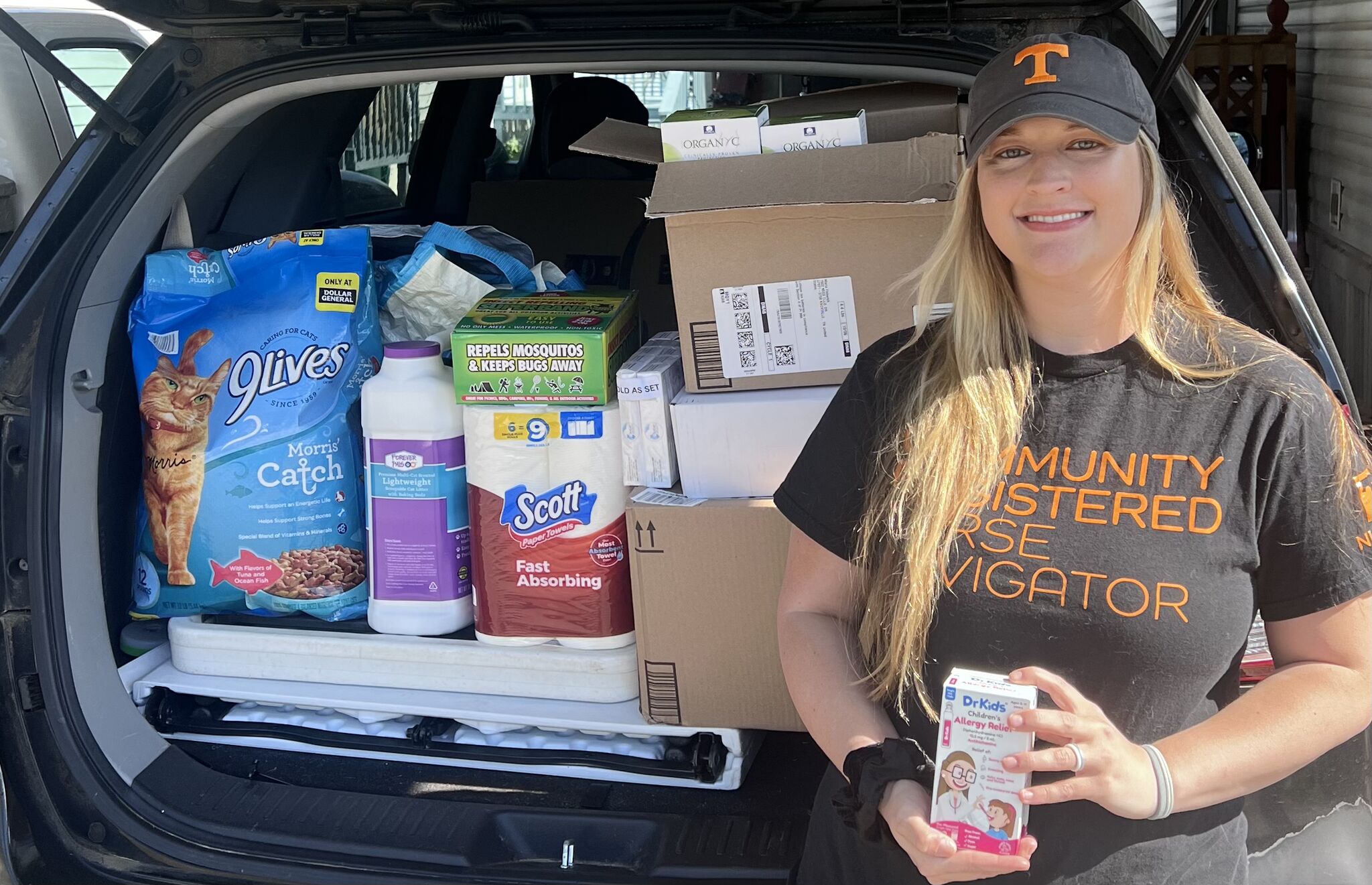
The University of Tennessee Knoxville’s College of Nursing Community Registered Nurse Navigators (CRNNs) are not only improving health outcomes through vaccine education and outreach, but they are also stepping up when communities need them most. After devastating flooding from Hurricane Helene, CRNNs in Northeast Tennessee have been hard at work providing critical disaster relief.
Alison Lundy, who serves Carter County, and Ashley Walton, who works in another region, joined forces to deliver much-needed supplies to flood victims.
“As a nurse navigator, my role has always been about serving the community in whatever way is needed,” said Lundy. “During the flood relief efforts, it was incredible to see how everyone came together to support one another. It’s moments like these that remind me why this work is so important—it’s about more than healthcare, it’s about being there for people when they need it most.”
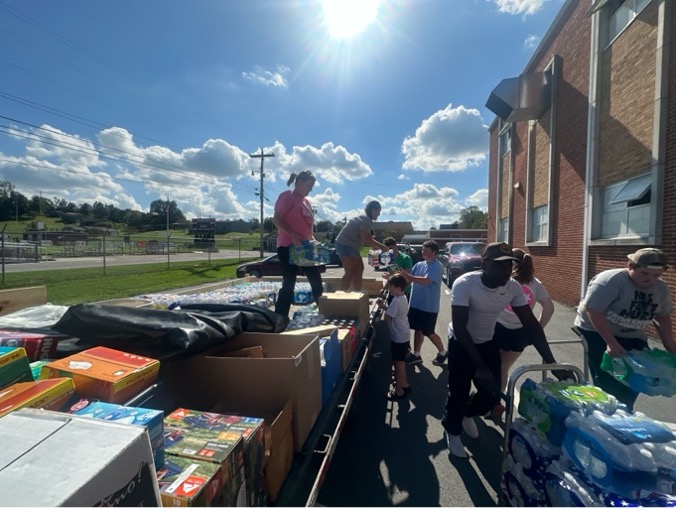
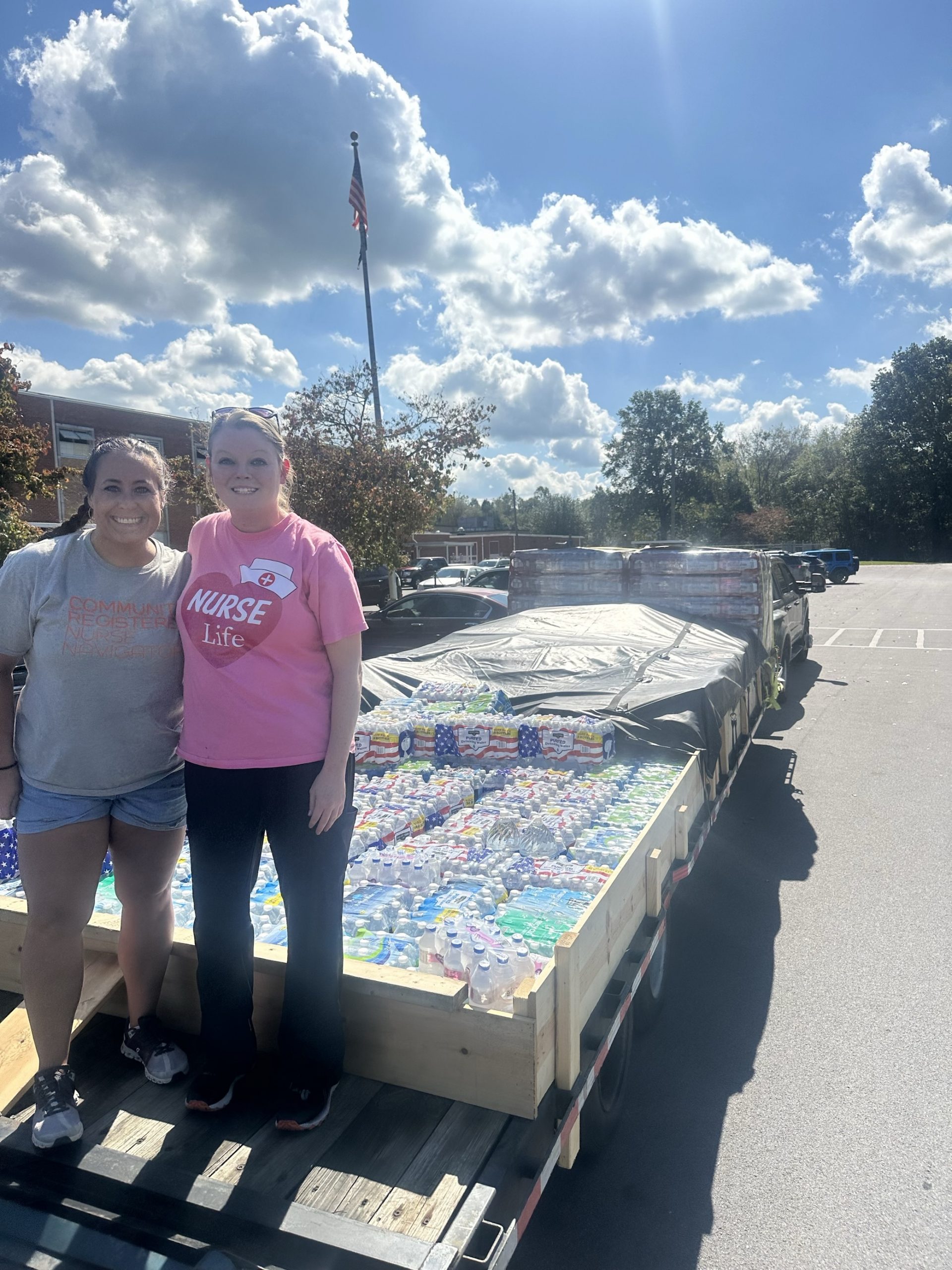
Walton, along with her husband, transported two trailers full of donated goods to Carter County, ensuring that residents received essential resources. The pair, along with other CRNNs, have been unloading supplies from Army helicopters and coordinating relief efforts on the ground.
“Helping with the flood relief was a natural extension of what we do as CRNNs,” added Walton. “We’re here to break down barriers, whether that’s for vaccines or in times of crisis. Being able to bring supplies and lend a hand to a community in need was an honor, and it reinforced just how strong and resilient these communities truly are.”
East region CRNN, Maria Fishwick is also providing support to her area.
Fishwick hosted a donation drive for families affected by the flooding in Cocke County. She was able to provide over 1000 trash bags, 25 headlamps, and several over the counter medications and sanitary products to drop locations.
She has also collected first aid kits to be delivered to the Newport community.
“These people mean so much to me, and it can already be hard enough in these rural areas without devastation, let alone after a shocking natural disaster,” shared Fishwick. “I will continue dropping donations to the area for the next several weeks-please reach out if you are interested in supporting the cause.”
Funded by a $5.5 million grant from the Tennessee Department of Health, the CRNN project was initially created to improve immunization rates across Tennessee. However, the core mission of the CRNN program—to address local health needs and barriers through community engagement—extends beyond vaccines.
Whether improving public health through education or stepping up in times of disaster, these nurse navigators are dedicated to strengthening Tennessee’s communities.
—
Media Contact:
Kara Clark (865-974-9498, kmclark2@utk.edu)